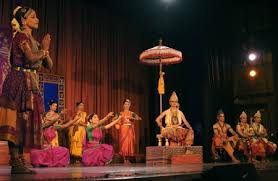
Indian Classical Drama – Key Notes
-
Definition of Drama:
-
A literary composition that narrates a story through:
-
Dialogues, gestures, movements, facial expressions.
-
Dance, costumes, music, stage setting, background scenery.
-
-
Considered a performing art, requiring:
-
Playwright, actors, director, costume/make-up artists, and audience.
-
-
Like other genres, it has a distinct origin, history, and evolution.
-
Origin of Indian Drama
-
Earliest roots traced to the Vedic era (1500–1000 BCE):
-
Evident in dialogue hymns & ritual performances in the Vedas.
-
-
Epics (like the Mahabharata) also mention nata (performers) as early as 400 CE.
-
Natyashastra by Bharatamuni (3rd CE):
-
Oldest surviving treatise on dramaturgy.
-
Provides rules for performance, acting, rasa, stagecraft.
-
Greek Influence Debate
-
Weber and some critics argue Indian drama was influenced by Greece:
-
Division into Acts & Scenes.
-
Use of Chorus.
-
Development of stock characters.
-
-
Key differences between Greek & Indian drama:
-
No tragedy in Indian tradition.
-
Greek drama → strict unities of time, place, and action.
-
Indian drama → free shifts across heaven, earth, multiple years.
-
Dance & music integral to Indian plays, absent in Greek theatre.
-
Supernatural presence (gods, goddesses) in Indian plays.
-
-
Also shaped by Buddhist & Jain traditions.
-
Example: Tamil epic Cilappatikaram reflects this fusion.
📘 Sanskrit Drama – Features
-
Purpose:
-
As per Natyashastra:
-
Drama meant for pleasure + instruction.
-
Should impart justice, wealth, moral lessons, spiritual upliftment.
-
-
No tragic ending – aligns with Hindu cosmology:
-
Death is not the end → rebirth or liberation (moksha).
-
-
-
Rasa (Aesthetic Sentiment):
-
Central concept of Sanskrit drama.
-
Rasa = audience’s refined emotional response.
-
Types of emotional states:
-
Vibhava – cause.
-
Anubhava – effect.
-
Vyabhicharibhava – transitory emotion.
-
Sthayibhava – permanent emotion.
-
-
Goal = create a blissful aesthetic experience.
-
Nine Rasas (Śṛṅgāra, Hāsya, Karuṇa, Vīra, Raudra, Bhayānaka, Bībhatsa, Adbhuta, Śānta).
-
-
Types of Plays:
-
Natyashastra classifies plays as:
-
Rupaka (major type) → 10 varieties:
-
Nataka: based on heroic tales, myths, epics.
-
Prakarana: based on fictitious/social stories, with ordinary characters.
-
-
Uparupaka (minor type) → shorter dramatic forms.
-
-
Sanskrit Drama – Plot, Language, and Features
Plot Structure (5 Transitions)
-
Sanskrit drama follows a structured progression of events:
-
Mukha (Origin) – introduces the seed or beginning of the plot.
-
Pratimukha (Incident) – develops story with both positive & negative events.
-
Garbha (Germ/Seed) – good actions/events seem to lead toward the desired outcome (phala).
-
Vimarsa (Crisis) – negative actions/events dominate, moving story away from the goal.
-
Nirvahana (Completion) – resolves conflicts, unites various threads, and provides closure.
-
Bilingual Nature
-
Language use in Sanskrit drama:
-
Sanskrit: spoken by elite classes – Brahmins, Kshatriyas, kings, sages.
-
Prakrits: spoken by common people – women, children, servants, soldiers.
-
-
Stock Characters:
-
Sutradhar – narrator/director.
-
Nayak – hero.
-
Nayika – heroine.
-
Vidushaka – clown/jester.
-
Each character speaks language based on caste, class, age, gender.
-
-
Audience limitations:
-
Plays catered mostly to royals, aristocrats, and educated upper castes.
-
Natyashastra itself states spectators should be noble and educated men.
-
All four castes could watch, but seating was segregated.
-
-
Impact:
-
Unlike Greek/English drama which became “people’s theatre,” Sanskrit drama remained elitist and court-centered.
-
Differences from European Drama
-
Actors:
-
In European classical drama, women were not allowed → men played female roles.
-
In Sanskrit drama, no restrictions:
-
Plays could be enacted by men alone, women alone, or mixed troupes.
-
-
-
Themes:
-
European tradition valued tragedy.
-
Sanskrit plays avoided tragic endings, aligning with Hindu belief in rebirth and spiritual liberation.
-
Major Drawbacks of Sanskrit Drama
-
Linguistic barrier: reliance on Sanskrit (declined as spoken language).
-
Rigid rules of dramaturgy (Natyashastra) restricted creativity & innovation.
-
Limited audience (royal courts, elites) → failed to become a popular art form.
-
Declined gradually with the fall of Sanskrit as a living language.
-
Yet, Sanskrit drama is still written and staged today by modern playwrights like Manmohan Acharya and Prafulla Kumar Mishra.
📘 Classical Sanskrit Playwrights
Bhasa (3rd–4th CE)
-
Life & Rediscovery:
-
Believed to have lived in Ujjain.
-
His works rediscovered in the 20th century:
-
Swapnavasavadatta found in 1909 (by Pandit Anandalvar).
-
13 plays discovered in 1913 (by T. Ganapati Shastri in Thiruvananthapuram).
-
-
-
Sources of Inspiration:
-
Epics: Mahabharata, Ramayana.
-
Puranas and semi-historical legends.
-
-
Style:
-
Did not strictly follow Natyashastra rules → experimented freely.
-
Some scholars suggest he may have written before Bharata’s treatise, others see him as a rule-breaker innovator.
-
-
Notable Works:
-
Swapnavasavadatta → story of King Udayana torn between love (Vasavadatta) and political alliance (Padmavati). Combines romance & political intrigue.
-
Urubhanga (Breaking of the Thighs) and Karnabhara (Karna’s Task) → tragic plays.
-
Unique because Sanskrit drama usually avoided tragic endings.
-
Humanized traditional “villains” Duryodhana & Karna.
-
-
Also wrote short plays, one-acts, and monologues.
-
-
Innovations:
-
Showed tragic endings (rare in Sanskrit drama).
-
Portrayed villains with sympathy & complexity.
-
Depicted violence directly on stage (against Natyashastra convention).
-
Classical Sanskrit Playwrights
Sudraka (2nd CE)
-
Background:
-
A poet-king, believed to have lived in Ujjain.
-
His works show awareness of urban life and social diversity.
-
-
Major Work – Mṛichchhakatika (The Little Clay Cart):
-
A Prakarana play (based on social/fictitious life, not heroic myths).
-
Adapted from Bhasa’s unfinished Charudattam.
-
Structure: 10 acts.
-
Plot:
-
Focuses on Charudatta, a poor but noble Brahmin, and Vasantasena, a courtesan.
-
Their love is obstructed by a jealous villain (Shakara).
-
False accusations, political intrigue, and social tension build up.
-
Ends happily → lovers united.
-
-
Themes:
-
Love across social classes.
-
Clash between virtue and corruption.
-
Justice ultimately prevailing.
-
-
Special Features:
-
Blend of romance, comedy, social realism, and suspense.
-
Detailed portrayal of urban society and complex social structures.
-
-
Other Works:
-
Vinavasavadatta (a Bhana → short one-act monologue).
-
Padmaprabhritaka.
-
-
Legacy:
-
Inspired the Hindi film Utsav (1984, directed by Girish Karnad).
-
-
Bhavabhuti (8th CE)
-
Background:
-
Court poet of King Yashovarman of Kannauj.
-
His style blends heroism, romance, and supernatural horror.
-
-
Major Works:
-
Mahaviracharita (Exploits of a Great Hero)
-
A Nataka play in 7 acts.
-
Focuses on early life of Rama from Ramayana.
-
-
Uttaramcharita (The Latter History of Rama)
-
Another Nataka in 7 acts.
-
Depicts final years of Rama’s life (based on Uttarakanda of Ramayana).
-
-
Malatimadhava (Malati and Madhava)
-
A Prakarana play (social setting).
-
Love story of Malati (minister’s daughter) and Madhava.
-
Marriage obstructed by powerful suitor (Nandana).
-
Magic and supernatural elements resolve conflict.
-
Unique mix of romance and horror.
-
-
-
Style & Contribution:
-
Rich in long poetic descriptions, though sometimes considered excessive.
-
No Vidushaka (comic element) → drama is serious in tone.
-
Replaces humor with supernatural, grotesque, and intense emotions.
-
Skillful evocation of Rasa:
-
Bibhatsa (disgust).
-
Raudra (anger).
-
-
Known for the fusion of heroism, love, and horror.
-
Kalidasa (4th–5th CE, Gupta Era)
-
Status:
-
Regarded as one of the greatest Sanskrit dramatists and poets.
-
Called the “Shakespeare of India”.
-
Works translated into numerous languages; celebrated for imagery and emotional depth.
-
-
Sources of Inspiration:
-
Based on Vedas, Puranas, and Epics.
-
But plots were reimagined and enriched with fresh poetic vision.
-
-
Dramas:
-
Malavikagnimitram → love story of King Agnimitra and maid Malavika.
-
Vikramorvasiyam → story of King Pururavas and celestial nymph Urvashi.
-
Abhijnana Shakuntalam (Recognition of Shakuntala) →
-
His most famous play.
-
Loved by Indian and Western audiences (Goethe praised it highly).
-
Explores love, loss, curse, recognition, and reunion between King Dushyanta & Shakuntala.
-
-
-
Epics (Mahakavyas):
-
Raghuvamsha (Dynasty of Raghu).
-
Kumarasambhava (Birth of Kumara/Subrahmanya).
-
-
Minor Poems (Khandakavyas):
-
Meghaduta (The Cloud Messenger) → exiled Yaksha sends a love message via a cloud.
-
-
Style & Legacy:
-
Master of similes and metaphors.
-
Blended nature, love, devotion, and grandeur of kingship.
-
Elevated human emotions into universal themes.
-
1. Indian Aesthetics: An Introduction
-
Drama in Indian tradition:
-
Storytelling through dialogue, gesture, movement, dance, music, costumes, and stage setting.
-
Considered a performing art involving playwright, actors, director, audience, and stage design.
-
-
Origin of Drama:
-
Traced to Vedic era (1500–1000 BCE) – dialogue hymns, ritual performances.
-
Early evidence in epics like the Mahabharata.
-
Bharatamuni’s Natyashastra (3rd CE) → earliest systematic treatise on dramaturgy.
-
-
Greek Influence Debate:
-
Critics like Weber: Indian drama borrowed from Greek (division into acts, use of chorus, stock characters).
-
Major differences:
-
No tragedy in Indian drama.
-
No strict unities of time/place/action (unlike Aristotle).
-
Heavy use of dance, song, supernatural elements (gods/goddesses).
-
-
Also influenced by Buddhist & Jain traditions.
-
-
Sanskrit Drama – Core Features:
-
Purpose: not just entertainment → also instruction, wealth, justice, spiritual liberation.
-
Rasa Theory:
-
Aim = evoke aesthetic delight.
-
Emotions categorized: Vibhava (cause), Anubhava (effect), Vyabhichari-bhava (transitory emotion), Sthayi-bhava (permanent emotion).
-
9 Rasas include śṛṅgāra (love), hāsya (laughter), karuṇa (compassion), vīra (heroism), raudra (anger), bhayānaka (fear), bībhatsa (disgust), adbhuta (wonder), śānta (peace).
-
-
Types of plays:
-
Rupaka (major): 10 varieties, e.g., Nataka (mythic/heroic) and Prakarana (social/fictitious).
-
Uparupaka (minor): short forms, farces, dance-based plays.
-
-
Plot structure: 5 stages – Mukha (origin), Pratimukha (incident), Garbha (seed/germ), Vimarsa (crisis), Nirvahana (completion).
-
Bilingual nature:
-
Sanskrit → spoken by elite (Brahmins, Kshatriyas).
-
Prakrit → spoken by women, servants, commoners.
-
Restricted audience (royalty, aristocracy, Brahmins).
-
-
Acting conventions:
-
Unlike Greek, women allowed on stage.
-
Plays performed by men, women, or both.
-
-
Drawbacks: linguistic barrier, rigid conventions, decline with fall of Sanskrit as spoken language.
-
2. Kalidasa: An Overview
-
Kalidasa: greatest Sanskrit poet-dramatist (4th–5th CE, Gupta period).
-
Style:
-
Known as “Indian Shakespeare” for mastery in poetic imagery, similes, and emotional depth.
-
Blended mythology with human emotions.
-
-
Major works:
-
Dramas:
-
Malavikagnimitram (love story of Agnimitra & Malavika).
-
Vikramorvasiyam (story of King Pururavas & nymph Urvashi).
-
Abhijnanashakuntalam (Recognition of Shakuntala) → most celebrated, translated by Goethe and others.
-
-
Epics: Raghuvamsha (dynasty of Raghu), Kumarasambhava (birth of Kartikeya).
-
Lyrics: Meghaduta (Cloud Messenger) → exiled Yaksha sends message via a cloud.
-
-
Themes in Kalidasa’s works:
-
Nature descriptions: rivers, clouds, seasons.
-
Love and separation.
-
Royal grandeur with personal emotion.
-
Fusion of dharma (duty) with kama (love).
-
3. Abhijnana Shakuntala – Textual Analysis
-
Plot:
-
King Dushyanta falls in love with hermit girl Shakuntala, daughter of sage Vishwamitra & celestial nymph Menaka.
-
They marry secretly (gandharva vivaha).
-
Due to sage Durvasa’s curse, Dushyanta forgets her until he sees the ring.
-
Shakuntala, pregnant, is rejected.
-
Divine intervention restores memory, couple reunited.
-
-
Themes:
-
Love, separation, reunion.
-
Human vs. divine will.
-
Power of fate and curse.
-
Forgiveness & restoration.
-
-
Dramatic elements:
-
Concealment: Shakuntala’s secret marriage, hidden pregnancy.
-
Nature as witness: hermitage, forests depicted as nurturing.
-
Symbolism: the ring → recognition, memory.
-
Mix of romantic, supernatural, and ethical elements.
-
4. Abhijnana Shakuntala – Character Analysis
-
Shakuntala:
-
Embodiment of grace, patience, devotion.
-
Represents ideal womanhood in classical thought.
-
Victim of fate yet dignified.
-
-
King Dushyanta:
-
Torn between love & duty.
-
His forgetfulness = human weakness.
-
Restored as noble king through repentance.
-
-
Durvasa:
-
His curse drives the plot → highlights fragility of human joy.
-
-
Kanva (foster father):
-
Symbol of ascetic wisdom.
-
-
Vidushaka (clown):
-
Provides comic relief & social commentary.
-
5. Mahabharata: An Overview
-
Composed by Vyasa; world’s longest epic (~100,000 verses).
-
Structure:
-
18 books (parvas).
-
Combines myth, history, dharma, philosophy.
-
-
Themes:
-
Conflict between Kauravas (Duryodhana) and Pandavas (Yudhishthira, Arjuna, Bhima, Nakula, Sahadeva).
-
Dharma vs. adharma.
-
Fate, free will, cosmic justice.
-
Bhagavad Gita → philosophical essence of karma, bhakti, jnana.
-
-
Features as epic:
-
Grand scope (family, politics, war, divine).
-
Similes, supernatural interventions.
-
Mixture of narrative + didactic sections.
-
6. The Dicing (Sabha Parva episode)
-
Key incident:
-
Shakuni tricks Yudhishthira in a rigged dice game.
-
Pandavas lose wealth, kingdom, brothers, and Draupadi.
-
-
Draupadi’s protest:
-
Raises legal and moral questions:
-
Could Yudhishthira stake her after losing himself?
-
Is woman property?
-
-
Highlights gender injustice & dharma crisis.
-
-
Symbolism:
-
Dice = fate, chance, human weakness.
-
Turning point leading to exile and war.
-
7. Sequel to the Dicing
-
Pandavas humiliated in court → Draupadi dragged, almost disrobed.
-
Krishna intervenes, protecting her honor.
-
Kauravas’ arrogance sealed their downfall.
-
Themes:
-
Dignity of women.
-
Dharma violated by those in power.
-
Seeds of Kurukshetra war.
-
8. Temptation of Karna (Udyog Parva)
-
Krishna reveals Karna’s true birth: son of Kunti & Sun god, elder brother of Pandavas.
-
Offers him kingship if he joins Pandavas.
-
Karna refuses:
-
Loyal to Duryodhana who supported him.
-
Chooses friendship over truth.
-
-
Themes:
-
Tragedy of loyalty.
-
Dharma vs. gratitude.
-
Fate stronger than choice.
-
9. Sudraka & Mrichchhakatika – Introduction
-
Sudraka: poet-king (2nd CE).
-
Known for Prakarana (social play) – Mrichchhakatika (Little Clay Cart).
-
Based on Bhasa’s incomplete Charudatta.
-
Features:
-
Realistic portrayal of urban society.
-
10 acts – love story of Brahmin Charudatta & courtesan Vasantasena.
-
Mix of romance, comedy, social criticism.
-
Ends happily (unlike many tragedies).
-
10. Mrichchhakatika – Plot, Structure & Analysis
-
Plot:
-
Charudatta (poor Brahmin) loves Vasantasena (courtesan).
-
Villain Shakara desires her, plots against Charudatta.
-
False accusation of murder.
-
Truth revealed; lovers united.
-
-
Structure:
-
Prakarana play: fictitious, focuses on commoners not kings.
-
Elements: romance, politics, humour, suspense.
-
-
Analysis:
-
Unique for its realism: depiction of thieves, gamblers, servants, urban tensions.
-
Characters drawn from different classes.
-
Tone: hope, optimism, social justice.
-
11. Themes in Mrichchhakatika
-
Love across class boundaries.
-
Corruption vs. virtue.
-
Wealth, poverty, greed.
-
Fate & chance → “little clay cart” symbol of fragility.
-
Justice triumphs over evil.
12. Characterization in Mrichchhakatika
-
Charudatta: noble, poor Brahmin; symbol of virtue and morality.
-
Vasantasena: courtesan, independent, generous, not stereotyped.
-
Shakara: villain, embodies greed and lust.
-
Maitreya: friend of Charudatta, comic element.
-
Servants/thieves: show social diversity.
13. Sangam Literature – Introduction
-
Sangam age (300 BCE – 300 CE) → Tamil literary assemblies.
-
Poetic corpus: Ettuthokai (Eight Anthologies), Pattupattu (Ten Idylls).
-
Themes:
-
Akam (interior love poetry).
-
Puram (exterior/war, public life).
-
Nature as symbolic landscape: Kurunji (mountain-love), Mullai (forest-waiting), Marutam (farmland-quarrel), Neital (seashore-separation), Palai (desert-hardship).
-
-
Importance:
-
Oldest secular literature in India.
-
Records social, political, cultural life of early Tamils.
-
14. Cilappatikaram – Textual Analysis
-
Epic by Ilango Adigal (2nd CE).
-
Story:
-
Merchant Kovalan leaves wife Kannagi for courtesan Madhavi.
-
Returns to Kannagi, but is falsely accused of theft in Madurai → executed.
-
Kannagi proves innocence, curses city → Madurai destroyed by fire.
-
-
Themes:
-
Chastity, justice, female virtue.
-
Tragedy and divine retribution.
-
Mix of history, myth, religion.
-
15. Divine, Human & Immortalised Characters in Cilappatikaram
-
Kannagi: mortal woman transformed into goddess of chastity and justice.
-
Kovalan: flawed human, redeemed through suffering.
-
Madhavi: courtesan, complex portrayal of love & art.
-
Divine elements: gods intervene in narrative, city destruction seen as cosmic justice.
16. Akam & Puram Poetry in Cilappatikaram
-
Akam (private, emotional):
-
Focus on love, longing, fidelity.
-
Kannagi’s devotion to Kovalan.
-
-
Puram (public, external):
-
Focus on war, heroism, justice, public honor.
-
Kannagi’s curse on Madurai = Puram element.
-
-
Cilappatikaram blends Akam (inner emotion) with Puram (public justice) → unique synthesis.