Contemporary Marketing Practices in India
Contemporary marketing practices leverage digital technology, data, and a customer-centric approach to build long-term relationships and drive engagement. This marks a significant evolution from traditional methods, which relied on one-way communication and broad-reach media like print and television. Modern strategies are dynamic, highly measurable, and personalized to meet evolving consumer expectations.
Core principles
- Customer-centricity: The focus has shifted from simply selling a product to understanding and satisfying the customer’s wants and needs. This approach builds loyalty and provides greater value.
- Data-driven decisions: Contemporary marketing uses analytics and big data to measure consumer behavior and campaign performance. Real-time insights allow for continuous optimization of marketing efforts, maximizing efficiency and return on investment (ROI).
- Integrated approach: Modern marketing combines multiple channels, both digital and, where effective, traditional, to deliver a cohesive and consistent brand message across all consumer touchpoints.
Key contemporary marketing practices
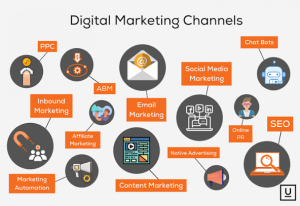
- Digital marketing
- Content marketing: Involves creating and sharing relevant content, such as blog posts, videos, and infographics, to attract and retain a clearly defined audience.
- Search engine optimization (SEO):The practice of optimizing content to rank higher in search engine results, increasing organic (unpaid) traffic to a website.
- Social media marketing: Uses platforms like Facebook, Instagram, and TikTok to engage with audiences, build brand awareness, and drive conversions through targeted campaigns and interactive content.
- Influencer marketing: Collaborates with social media influencers to promote products or services to their dedicated followers, leveraging their authority and reach within specific niches.
- Email marketing: Uses targeted email campaigns to nurture customer relationships, promote products, and provide value to a subscriber base.
- Consumer engagement and experience
- Personalization: Delivering customized marketing messages and product recommendations based on individual customer data and behavior. Artificial intelligence (AI) and machine learning are often used to facilitate this process.
- Omnichannel marketing: Creates a seamless and integrated customer experience across all communication channels, whether online or offline.
- Co-creation: Involves the customer directly in the marketing and product development process. For example, a company might use social media polls to help design a new product.
- Customer experience (CX) focus: Emphasizes providing a positive and consistent experience at every customer touchpoint, from browsing a website to receiving customer service.
III. Ethical and societal marketing
- Corporate Social Responsibility (CSR):Integrates social and environmental concerns into a brand’s marketing and business operations. This builds trust and loyalty with socially conscious consumers.
- Sustainable marketing: Promotes environmentally friendly practices and products, aligning the brand with customers who prioritize sustainability.
- Transparency: Being open and honest with consumers about business practices, data usage, and product sourcing.
- Challenges and considerations
While offering powerful new tools, contemporary marketing also presents several challenges:
- Technological complexity: Businesses must stay updated with a rapidly evolving array of digital platforms, tools, and algorithms.
- Content saturation: The high volume of online content requires marketers to create high-quality, relevant, and creative material to stand out.
- Data privacy concerns: Marketers must navigate complex data protection regulations like GDPR while maintaining consumer trust.
- Measuring ROI: Attributing conversions and calculating the exact ROI can be difficult due to the complexity of multi-channel campaigns.
- Future of contemporary marketing practices
The future of contemporary marketing will be defined by its increasing reliance on data, AI, and automation to deliver hyper-personalized and seamless omnichannel customer experiences. At the same time, shifting consumer behaviors will force a renewed focus on authenticity, ethical practices, and sustainability.
- Technology-driven trends
AI and predictive analytics– AI will shift from simply generating content to becoming the central nervous system for marketing strategy. Marketers will use AI to process vast amounts of customer data in real-time, enabling:
- Predictive analytics: AI will forecast customer behavior and trends with greater accuracy, allowing for proactive strategy adjustments.
- Real-time personalization: Algorithms will tailor content, product recommendations, and offers to individual users in the moment, rather than relying on broad segments.
- Automated optimization: AI will continuously test and refine marketing campaigns, adjusting creative and targeting for maximum efficiency without constant human input.
- The dominance of immersive and visual content
Video and interactive formats will continue to outperform other content types.
- Short-form video: Platforms like TikTok and Instagram Reels will remain critical for capturing shrinking attention spans and driving product discovery.
- Interactive content: Gamified ads, quizzes, and shoppable videos will allow for more engaging, two-way interactions between brands and consumers.
- AR and VR: Augmented and virtual reality will create immersive brand experiences, such as virtual try-ons and virtual showrooms, bridging the gap between digital and physical shopping.
III. Evolving search and discovery- As search engines incorporate generative AI, marketers must adapt to a “zero-click” and conversational search environment.
- AI-driven search optimization (ASO):Content will need to be optimized for AI-powered answer engines, prioritizing authoritative, well-structured, and conversational responses over simple keywords.
- Search everywhere optimization: Instead of focusing only on traditional search engines, brands will need to optimize for discovery on social platforms, voice assistants, and other AI-driven platforms where consumers are increasingly searching.
- Voice and visual search: The growth of smart speakers and visual tools like Google Lens will require a shift to natural language content that caters to spoken and image-based queries.
- Consumer-centric shifts- Hyper-personalization powered by first-party data.The phase-out of third-party cookies is shifting the focus toward collecting data directly from customers.
- Zero-party data: Brands will increasingly collect data that customers willingly share through preference centers, quizzes, and surveys.
- Loyalty and community: Loyalty programs and brand communities will become vital for gathering valuable customer insights while building trust and long-term relationships.
- Privacy-conscious personalization: The future of personalization will involve a transparent exchange of value, where customers are clear on what data they are sharing and what personalized benefits they receive in return.
- The rise of the creator economy and social commerce- Consumer trust is moving from big influencers to smaller, niche creators.
- Micro and nano-influencers: Brands will favor authentic, niche-specific partnerships over broad celebrity endorsements, as these smaller creators have more highly engaged audiences.
- Social media as a storefront: Social platforms will continue to integrate seamless e-commerce functionalities, allowing users to move from content discovery to purchase within the app.
- Authenticity over perfection: User-generated content and behind-the-scenes glimpses will gain traction as consumers seek authenticity, balancing the need for AI-driven efficiency with a human touch.
- Demand for brand integrity and values- Consumers are using their purchasing power to support brands that align with their values.
- Ethical marketing and transparency: Consumers demand honesty and transparency in advertising, fair pricing, and ethical product sourcing.
- Social and environmental responsibility: Brands that actively commit to sustainability and social causes will attract and retain eco-conscious consumers.
- Diversity and inclusion: Marketing campaigns that authentically reflect and support diverse communities will resonate more positively with a broader audience.
VII. Integrating channels and experiences- Omnichannel convergence-The boundaries between online and offline marketing are blurring, with consumers expecting a seamless journey across all touchpoints.
- Unified experience: Marketers will connect data and messaging across websites, mobile apps, social media, email, and in-store interactions to deliver consistent experiences.
- Adtech and Martech convergence: The tools for advertising and marketing are merging, creating integrated platforms that allow for more effective, full-funnel campaign orchestration.
- Phygital marketing: Experiential and direct marketing will make a comeback, but with a digital twist, as brands integrate physical and digital interactions.