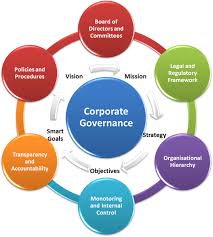
The Meaning and Importance of Corporate Governance
Corporate governance is the system by which businesses are directed and controlled in the best interests of all stakeholders. It is the framework of rules, relationships, systems, and processes by which authority is exercised in corporations. It lays emphasis on ethics, fair business practices, transparency, disclosure, and the conduct of business for the benefit of all stakeholders, encompassing shareholders, management, customers, suppliers, financiers, government, and the community.
Progressive Indian firms such as Infosys, Wipro, Reliance Industries, and Hindustan Unilever Limited (HUL) have implemented robust corporate governance codes to ensure ethical and efficient conduct, setting benchmarks for others. The importance of good governance is underscored by research; a study by the MIT Sloan School of Management covering 256 companies found that businesses with superior corporate governance practices earned, on average, 20% higher profits than other companies.
Definitions and Global Perspective
At its core, corporate governance is about promoting fairness, transparency, and accountability. The World Bank defines corporate governance as the system by which companies are directed and controlled, emphasizing the structures and functions that ensure companies are managed in a transparent and accountable manner. The Cadbury Committee, a pioneering force in governance reform, defined it similarly, highlighting its role in directing and controlling companies to align management actions with shareholder and stakeholder interests.
Objectives of Corporate Governance
The primary objectives are to create a system that ensures long-term stakeholder value. This involves:
-
Resolving Conflict: Addressing the agency conflict between management and shareholders.
-
Ensuring Efficiency: Guaranteeing the business is run in an efficient and profitable manner.
-
Protecting Interests: Safeguarding the rights and interests of all investors, both large and small.
-
Promoting Welfare: Ensuring decisions promote the welfare of all stakeholders.
-
Ensuring Transparency: Mandating the disclosure of all material facts to stakeholders.
-
Board Independence: Ensuring the independence of the Board and fair representation.
-
Incentive Alignment: Designing incentive systems that reward performance and long-term value creation.
-
Promoting Ethics: Encouraging ethical conduct and fair business practices across all operations.
-
Facilitating Capital: Creating an environment that allows the company to raise capital efficiently when required.
-
Risk Mitigation: Identifying and taking proactive steps to counter the risks faced by the company.
Characteristics and Key Elements
Effective corporate governance is characterized by its focus on stakeholder welfare, acting as a system for direction and control. It is a global practice followed by companies worldwide, bringing discipline to the usage of resources, preventing wastages, and ensuring accountability. It is fundamentally related to ethics, with transparency being a crucial pillar. The Board of Directors must be provided with timely and accurate information to make informed decisions, and shareholders must be fully informed of the company’s position.
Key Elements
-
Honesty, Trust, and Integrity
-
Ethical Behavior and Openness
-
Accountability and Performance Orientation
-
Commitment to the Organization
-
Right and Equitable treatment of all shareholders
-
Recognition and protection of the rights of all stakeholders
Principles of Corporate Governance
-
Fairness: The board of directors must treat shareholders, employees, vendors, and communities fairly and with equal consideration.
-
Transparency: The board should provide timely, accurate, and clear information about such things as financial performance, conflicts of interest, and risks to shareholders and other stakeholders.
-
Risk Management: The board and management must determine risks of all kinds and how best to control them. They must act on those recommendations to manage them. They must inform all relevant parties about the existence and status of risks.
-
Responsibility: The board is responsible for the oversight of corporate matters and management activities.
-
It must be aware of and support the successful, ongoing performance of the company. Part of its responsibility is to recruit and hire a Chief Executive Officer (CEO). It must act in the best interests of a company and its investors.
-
-
Accountability: The board must explain the purpose of a company’s activities and the results of its conduct. It and company leadership are accountable for the assessment of a company’s capacity, potential, and performance. It must communicate issues of importance to shareholders.
Issues and Need for Corporate Governance
The need for robust corporate governance arises from several critical issues. These include the necessity for:
-
Transparency and Disclosure: Preparing true and fair financial statements.
-
Strong Internal Controls: Setting up systems to prevent errors and frauds.
-
Board Independence: Ensuring a suitable mix of executive and non-executive directors.
-
Auditor Independence: Guaranteeing unbiased audits.
-
Fair Compensation: Designing pay structures that encourage performance without creating excessive gaps.
Furthermore, corporate governance acts as a vital barrier to corrupt practices, focusing on ethical dealings to prevent the kind of scandals that have plagued the corporate world. It ensures managerial decisions benefit the company and promotes efficient practices for long-term success. In an era of globalization and a widespread shareholder base, it provides a common framework for protecting investor interests, regardless of their location. It also addresses modern challenges like widening salary gaps, faulty incentive systems, and the growing influence of institutional investors who demand high governance standards.
Principles and Parties Involved
Core Principles
-
Transparency & Disclosure: Open communication and truthful financial reporting.
-
Fair Business Dealings: Conducting business ethically and within the law.
-
Managerial Accountability & Responsibility: Management is accountable to stakeholders for performance and ethical conduct.
-
Integrity & Control: Honest operations with systems to monitor performance and prevent fraud.
-
Investor Protection & Stakeholder Interests: Protecting rights and promoting the welfare of all parties connected to the company.
-
Role of the Board: The Board must oversee major issues, supported by committees like the audit and compensation committees.
-
Right Incentives & Disciplining: Rewarding good performance and having the power to replace bad management.
Parties Involved
Chief Executive, Board of Directors, Management, Shareholders, Auditors, and other stakeholders like creditors, employees, customers, suppliers, government, and the community.
Corporate Governance Rating and Social Audit
To assess the quality of governance, organizations like CRISIL and ICRA in India provide Corporate Governance Ratings. These ratings offer investors an independent assessment of a company’s governance practices.
Complementing this is the concept of a Social Audit. Defined by Bowen and Finn as “a commitment to systematic assessment of and reporting on some meaningful definable domain of a company’s activities that have social impact,” it evaluates a company’s social performance.
Areas Covered
-
Ecology and Environment: Pollution prevention and recycling.
-
Consumerism: Truthful advertising and product quality.
-
Government Relations: Ethical policy influence.
-
Minorities and Weaker Sections: Providing employment and skill training.
-
Labor Relations: Safe working conditions and fair wages.
-
Shareholder Relations: True financial reporting and proper use of funds.
Together, corporate governance and social audits ensure that a company is not only profitable but also responsible, ethical, and sustainable in the long run.
Four Ps of Corporate Governance
-
People: This ‘P’ emphasizes the importance of the individuals involved in corporate governance, including the board of directors, executives, and employees. The composition of the board, their skills, independence, and diversity are crucial factors.
-
Purpose: Purpose refers to the overarching mission and goals of the company. Corporate governance ensures that the company’s purpose aligns with ethical standards and is focused on creating long-term value for shareholders and stakeholders.
-
Processes: This ‘P’ involves the systems and procedures established to oversee and manage the company. Governance processes include how decisions are made, how risk is assessed and managed, and how accountability is maintained.
-
Practices: Performance in corporate governance relates to the company’s overall success in achieving its goals while adhering to ethical standards. The governance framework monitors and evaluates the performance of the company against established benchmarks.
Key Components of Corporate Governance
Board of Directors
Composition and Independence
-
The number of directors can vary depending on the size of the company. The board of directors must have a minimum of three directors if it is a public company, two directors if it is a private company, and one director in a one-person company. The maximum number of members a company can assign as directors is fifteen.
-
At least one director, who has lived in India for a minimum of 182 calendar days of the previous year, shall be appointed by every company’s board. It is a mandatory rule.
-
At least, one woman director must be appointed by the company. All listed companies must have at least one-third proportion of their board of directors as independent directors.
Board Committees
-
Board committees are sub-groups of the board of directors that are formed to focus on specific areas of responsibility. Not every board of directors has committees, but they are common in larger organisations.
-
Some of the most common board committees include audit committees, compensation committees, and nominating committees.
Shareholders and Stakeholders
Rights and Responsibilities
-
Shareholders have the right to vote on important company decisions, such as electing the board of directors, approving mergers and acquisitions, and making changes to the company’s articles of incorporation.
-
They also have the right to receive dividends and to inspect the company’s books and records.
Minority Shareholder Protection
-
Minority shareholders are shareholders who own less than 50% of a company’s shares and do not have full control over the corporation.
-
However, they still have the right to vote and can hold directors and officers accountable for their actions, which ultimately leads to greater efficiency and increases financial returns.
Disclosure and Transparency
Financial Reporting
-
Financial reporting is the process of disclosing financial information to stakeholders. It includes the preparation of financial statements, such as balance sheets, income statements, and cash flow statements.
-
Financial reporting is governed by various accounting standards, such as Generally Accepted Accounting Principles (GAAP) and International Financial Reporting Standards (IFRS).
Non-Financial Disclosure
-
Non-financial disclosure refers to the disclosure of information that is not directly related to a company’s financial performance. This can include information about a company’s Environmental, Social, and Governance (ESG) practices.
Environmental, Social and Governance (ESG) Goals
-
ESG goals are a set of standards for a company’s operations that force companies to follow better governance, ethical practices, environment-friendly measures and social responsibility.
Components of ESG
-
Environmental criteria consider how a company performs as a steward of nature.
-
Social criteria examine how it manages relationships with employees, suppliers, customers, and the communities where it operates.
-
Governance deals with a company’s leadership, executive pay, audits, internal controls, and shareholder rights.
-
It focuses on non-financial factors as a metric for guiding investment decisions wherein increased financial returns is no longer the sole objective of investors.
-
Ever since the introduction of the United Nations Principles for Responsible Investing (UNPRI) in 2006, the ESG framework has been recognised as an inextricable link of modern-day businesses.
-
ESG Framework relates to intangible aspects of corporate governance unlike Corporate Social Responsibility (CSR) which fufils the tangible aspects through implementation of projects.
-
In developing economies like India, CSR is seen as part of corporate philanthropy in which corporations augment the social development to support the initiatives of the government and it also synchronises the concept of good governance with corporate governance.
Regulatory Framework for Corporate Governance in India
Evolution of Regulatory Framework
Regulatory Authorities
-
The Ministry of Corporate Affairs (MCA) and the Securities and Exchange Board of India (SEBI) play pivotal roles in overseeing corporate governance initiatives in India.
-
Their responsibilities encompass establishing and enforcing regulations to ensure ethical business practices and safeguard the interests of stakeholders.
Corporate Governance Regulation
-
In the 1990s, SEBI took charge of regulating corporate governance through key laws such as the Security Contracts (Regulation) Act, 1956; Securities and Exchange Board of India Act, 1992; and the Depositories Act of 1996, marking a crucial period of regulatory development.
Introduction of Formal Framework
-
In a landmark move in 2000, SEBI instituted the first formal regulatory framework for corporate governance in response to recommendations from the Kumar Mangalam Birla Committee, 1999.
-
This initiative aimed to enhance corporate governance standards in India and laid down guidelines for transparent and accountable business practices.
Subsequent Governance Initiatives
-
Building on these developments, a significant corporate governance initiative unfolded in 2002 when the Naresh Chandra Committee on Corporate Audit and Governance extended its recommendations to address various governance issues.
-
Notable examples include setting up the Confederation of Indian Industry (CII), National Foundation for Corporate Governance (NFCG), and the Institute of Chartered Accountants of India (ICAI), all working collectively to foster responsible and transparent corporate practices in the country.
Companies Act, 2013
Provisions Related to Corporate Governance
-
These provisions include greater accountability on companies through the appointment of Key Managerial Personnel (KMPs), the role of audit committees, independent audits, stricter regulation of related party transactions, and restrictions on layers of companies.
-
Enhanced disclosures are mandated, including through the board’s report, financial statements, and filings with the Registrar of Companies, to ensure that all relevant information is available to investors and regulatory agencies.
Amendments and Updates
-
Some of the key amendments include the introduction of the National Company Law Tribunal (NCLT) and the National Company Law Appellate Tribunal (NCLAT) to replace the Company Law Board, the introduction of the Insolvency and Bankruptcy Code, 2016.
-
The amendment of the definition of “related party” to include entities holding equity shares of 10% or more in the listed entity either directly or on a beneficial interest basis.
-
The Act has also been amended to provide for the appointment of an independent director in case of a company with a paid-up share capital of ten crore rupees or more, and the requirement of a special resolution for the appointment of an auditor.
National Financial Reporting Authority (NFRA)
-
NFRA is an Indian regulatory body that was established in 2018, under section 132 of the Companies Act, 2013. The duties of the NFRA include recommending accounting and auditing policies and standards to be adopted by companies for approval by the Central Government etc.
Ethical Challenges in Corporate Governance
-
Selection Procedure and Term of Board: The selection of board members and their term is highly misused in Indian corporate governance. The term of the board members should be long enough to ensure stability, but not so long that they become complacent.
-
Example: Tata-Mistry fallout (2016).
-
-
Performance Evaluation of Directors: The performance evaluation of directors is a challenging aspect.
-
Example: SEBI (2018) disclosure norms.
-
-
Missing Independence of Directors: Independence often compromised.
-
Example: ICICI Bank controversy (2018).
-
-
Removal of Independent Directors: Risk of removal for dissent.
-
Example: Fortis Healthcare case (2018).
-
-
Liability Toward Stakeholders: Mismanagement affecting stakeholders.
-
Example: IL&FS crisis (2019).
-
-
Founder/Promoter’s Role: Can lead to conflicts of interest.
-
Transparency and Data Protection: Lack of safeguards.
-
Example: RBI directives (2018).
-
-
Business Structure and Internal Conflicts: Poor structure leads to disputes.
-
Example: IndiGo Airlines issue (2019).
-
-
Conflict of Interest: Managers enriching themselves.
-
Weak Board: Lack of diversity and expertise.
-
Insider Trading: Use of confidential information for personal gain.
Reforms Needed in Corporate Governance
-
Strengthening Board Independence
-
Enhancing Transparency and Disclosure
-
Empowering Shareholders
-
Effective Risk Management
-
Ethical Conduct and Compliance
-
Executive Compensation Policies
-
Corporate Social Responsibility (CSR)
-
Board Training and Development
-
Regulatory Compliance
-
Stakeholder Engagement
Examples: Infosys, Tata Sons, Mahindra & Mahindra.
Committee Reports and Supreme Court Judgments
Kotak Panel Report (2017)
-
Separation of Chairman and CEO
-
Minimum six directors with 50% independent directors
-
At least one woman independent director
-
Disclosure of skills and qualifications
-
Auditor accountability
-
Whistleblower protection
TK Viswanathan Committee (2018)
-
Separate codes for insider trading
-
Monitoring of relatives and financial relationships
-
Electronic database maintenance
-
Enhanced SEBI powers
Kumar Mangalam Birla Committee Report (2000)
-
Separation of roles of Chairman and CEO
-
Appointment of independent directors
-
Audit committees
-
Disclosure norms
-
Code of conduct
Supreme Court Judgements
-
Satyam Fraud Case (2009)
-
SEBI v. Sahara (2012)
Conclusion
Addressing the multifaceted aspects of corporate governance in India requires a holistic approach involving legal reforms, regulatory enhancements, and a cultural shift towards ethical business practices. Continuous monitoring and adaptation to evolving global standards are imperative for sustaining investor trust and fostering economic growth.