Distribution Strategy in Contemporary India
Distribution Strategy –Concept
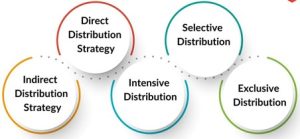
A distribution strategy is a plan for making products and services available to customers, encompassing decisions on how to deliver goods and reach potential buyers, often considering factors like product type, target market, and company resources. Key strategic choices include direct distribution (e.g., company-owned stores, online sales) and indirect distribution (using intermediaries like wholesalers and retailers). Companies also choose between intensive, selective, or exclusive distribution based on how many outlets they use, with intensive for convenience goods and exclusive for high-value items.
Purpose of a Distribution Strategy
- Market Reach: To get products and services to the right customers effectively and efficiently.
- Customer Needs: To meet the specific needs of the target market and make purchasing easier.
- Business Goals: To support overall company objectives by selecting optimal ways to reach customers and generate revenue.
- Cost-Effectiveness: To find the most cost-effective methods for delivery and logistics, increasing profitability.
Types of Distribution Strategies
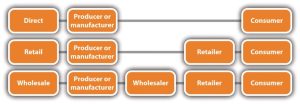
Direct Distribution: The company sells products directly to the end customer.
- Examples:Company-owned e-commerce sites, retail stores, or direct sales teams.
Indirect Distribution: Products are sold through one or more intermediaries, such as wholesalers, distributors, or retailers.
- Examples:A manufacturer selling to a wholesaler, who then sells to a retailer, who finally sells to the end consumer.
- Intensive Distribution: A product is made available in as many outlets as possible.
- Best for:Low-cost, frequently purchased items like convenience goods.
- Selective Distribution: A product is available in a limited number of carefully selected outlets.
- Best for:Specialized products that require some customer consideration before purchase, like appliances or electronics.
- Exclusive Distribution: A product is available in only one or a very limited number of outlets in a given area.
- Best for:High-value, luxury items that require a high level of customer service and consultation, such as cars or designer bags.
Factors to Consider When Choosing a Strategy
- Product Characteristics: The type of product, its price, and how often it’s purchased will influence the strategy.
- Target Market: Understand how and where your ideal customers prefer to buy and what makes purchasing easier for them.
- Competition: Analyze competitor distribution strategies to find opportunities.
- Company Resources: Your own resources and capabilities will determine which strategies are feasible.
- Channel Conflict: If using multiple channels, strategize to avoid conflict between your direct and indirect sales efforts.
Distribution Strategy and Contemporary Practices in India
In contemporary India, distribution strategies combine traditional networks with modern technology to reach a vast and diverse market. While the backbone of distribution still involves intermediaries like wholesalers and retailers, particularly in rural areas, e-commerce, and direct-to-consumer (D2C) channels are driving significant innovation in urban and semi-urban centers.
- Hybrid and omni-channel models
`The most prominent trend in contemporary Indian distribution is the shift towards hybrid, or omnichannel, strategies. Companies are moving beyond a single channel to create a seamless customer experience that merges online and offline sales.
- Offline integration: Companies like Reliance are partnering with traditional kirana(mom-and-pop) stores to integrate them into their digital and supply chain networks. This strategy leverages the deep-seated trust and last-mile connectivity of local shops.
- Leveraging technology: Omnichannel sales partners assist brands in unifying their inventory for both online and offline fulfillment. They work with a brand’s existing offline distributors to create “omnichannel fulfillment centers” (OFCs), reducing inventory duplication and operational complexity.
- D2C expansion: The direct-to-consumer model is a major disruptor, allowing brands to sell directly to customers through their own websites and fulfillment centers. This cuts out intermediaries, potentially increasing profit margins and allowing for greater brand control and customer engagement. Brands like boAt and Lenskart have successfully used this model to grow their businesses.
- Multi-tiered distribution for market penetration
To cover India’s vast geography and reach both densely populated urban centers and scattered rural villages, a complex, multi-tiered structure is commonly used, especially for Fast-Moving Consumer Goods (FMCG).
- Super stockists and distributors: In this model, manufacturers sell in bulk to super stockists in a specific region, who then supply smaller distributors. These distributors, in turn, sell to a network of wholesalers and retailers.
- Rural reach: To address low-income, remote rural areas, large FMCG companies like Hindustan Unilever have developed innovative strategies like “Project Shakti,” which trains rural women to become micro-distributors and sales agents.
- Flexible models: Given India’s diversity, companies frequently adopt different models for different markets. For example, a company might use a direct approach in regions where it has a strong presence, while relying on indirect channels in new, less-established areas.
- Technology-driven improvements
Technology plays a critical role in modernizing and optimizing distribution networks.
Logistics and tracking: Innovations like advanced planning optimizers (APO) and real-time tracking systems enable companies to forecast demand, manage inventory efficiently, and improve delivery fill rates.
- E-B2B platforms: The emergence of Business-to-Business (B2B) e-commerce platforms is streamlining the traditional distributor-to-retailer relationship, providing better inventory tracking and analytics for all parties.
- Enterprise Resource Planning (ERP): ERP and distributor management systems (DMS) provide brands with real-time data and analytics on sales, inventory, and demand forecasting. This gives companies greater visibility and precision in their distribution strategies.
- Rural market penetration
India’s vast and diverse rural population represents an immense growth opportunity. Companies employ specialized strategies to reach these areas.
- Super distributor network: Many companies use a “super distributor” model to reach small towns and villages efficiently, using robust logistics and optimized working capital.
- Micro-distributors: Companies like Hindustan Unilever have innovative programs like Project Shakti, which empowers rural women to become sales agents. This creates a hyper-local distribution network that builds community trust.
- E-commerce in rural areas: The expansion of courier networks into smaller cities has made the D2C model increasingly viable for rural consumers.
- Technology and data analytics
Modern distribution strategies are heavily reliant on technology to streamline operations and gain a competitive edge.
- Inventory and supply chain management: Technology provides real-time data on stock levels and movements, enabling accurate demand forecasting and reducing operational complexities.
- B2B e-commerce platforms: Technology platforms like Udaan are transforming the traditional distributor model. They facilitate better inventory tracking and communication between brands and channel partners.
- Analytics for decision-making: Data analytics helps companies understand consumer behavior and market trends, allowing them to optimize their distribution strategy with precision.
Factors affecting Distribution Strategy
Several unique factors shape distribution strategies in India:
- Location of business
This is one of the most important factor in deciding the distribution strategy. If location is business is at a place where distribution can be readily done like near a port or railway lines, then we can rely on that mode for distribution and save costs as well.
- Location of target market
Now distribution is done from manufacturer/distributor/retailer to the end customer. If end customer is located or interacting with similar products at a particular location then the distribution strategy needs to include it. If the target market is professionals then the product should be available near offices or inside offices through partnerships so that the product is available where the demand is.
- Reaching the target market
The end goal of a product is to reach the target audience when required. Distribution strategy has to ensure that the product reaches the potential customers when they look for the same. During summers e.g. a beverage company would make sure that it is present in all retail stores in sufficient quantity.
- Warehousing
Properly storing the inventory at apt locations is an important aspect while deciding the distribution strategy. Warehousing and inventory management come into picture.
- Transportation and logistics
Transportation is one of the most important aspect of distribution strategy. Without proper transportation either the product will not reach the target market in time or may be it would not be in right quality. e.g. if a company deals in frozen foods, then it needs to make sure that the transportation and logistics are taking care of that through cold storage and temperature maintenance.
- Geographic diversity:
India’s vast and diverse market requires highly localized strategies. Different regions have different demographics, purchasing power, and consumer behaviors.
- Market fragmentation:
The retail sector is heavily dominated by a large number of unorganized, family-owned shops, coexisting alongside a rapidly growing organized retail sector.
Infrastructure: While improving, India’s logistics infrastructure still presents challenges, particularly for last-mile delivery in rural areas. This makes local distribution partnerships crucial.
Challenges for Distribution strategy in India
- Geographical diversity: India’s size, varied demographics, and infrastructure challenges make nationwide distribution complex. Many companies find it more effective to use multiple regional distributors rather than one national partner.
- Competition:The market is intensely competitive, with companies needing a multi-pronged strategy to ensure product availability everywhere.
- Last-mile delivery: Despite technological advancements, efficiently handling the final stage of delivery to the end consumer, especially in remote areas, remains a logistical challenge for D2C brands.
- Regulatory landscape: Businesses must adhere to regional variations in laws and regulations, and manage taxation issues like GST.
Contemporary distribution strategy in India is a hybrid system that leverages the deep-rooted trust of traditional networks while aggressively integrating modern digital technologies. Successful companies focus on creating a unified, omnichannel experience tailored to India’s unique blend of urban, semi-urban, and rural markets.