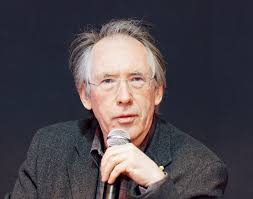
Ian McEwan (1948-)- one of the finest humanist novels of 21st century.
Ian Russell McEwan (born 21 June 1948, Aldershot, Hampshire) is a leading British novelist, short-story writer and screenwriter noted for precise prose, psychological intensity, and moral inquiry. He studied English at the University of Sussex and completed postgraduate work at the University of East Anglia, where he emerged from a period of early short stories (first collected in First Love, Last Rites, 1975) that earned him the nickname “Ian Macabre.” Over five decades he has shifted from unsettling, transgressive early fiction to wider realist and speculative canvases, winning major awards including the 1998 Booker Prize for Amsterdam and gaining international acclaim for Atonement (2001), which has become central to his reputation. McEwan’s recurring interests include ethical choice, the interplay between private desires and public events, memory and narrative, and scientific/technological dilemmas. He has written across forms — novella, full-length novel, and dramatized adaptations — and his work frequently blends tightly observed domestic scenes with wider philosophical or political stakes. McEwan continues to publish into the 2020s, exploring both contemporary and speculative futures in novels such as Lessons (2022) and What We Can Know (2025).
- The Cement Garden (1978)
Plot & outline
The Cement Garden follows four siblings (Jack, Julie, Sue, and Tom) who, after their mother’s sudden fatal illness and their father’s earlier death, conceal the mother’s corpse in cement in the cellar to avoid social services and the breakup of their household. Cut off from adult supervision and societal norms, the children devolve into a claustrophobic, ritualized domesticity. Power dynamics shift among them; adolescent sexuality, mimicry of adult behaviours, and the collapse of moral boundaries intensify. When outsiders—their aunt and neighbours—begin to intrude, the fragile arrangement breaks down, producing lethal consequences and exposing the psychological cost of suffocation and secrecy. The prose’s clinical detachment heightens the novel’s horror: McEwan presents childhood as a fragile institution whose collapse yields unsettling ethical ambiguity.
Major characters: Jack (narrator/older brother), Julie, Sue, Tom, the parents (absent/declared dead), their aunt.
Themes: Death and denial, familial rupture and isolation, taboo/sexual awakening, the effects of social abandonment. The novel launched McEwan’s reputation for disturbing, sharply controlled depictions of moral collapse.
- The Comfort of Strangers (1981)
Plot & outline
A short, tightly wound novel, The Comfort of Strangers tracks an English couple, Mary and Colin, who travel to an unnamed foreign city (Venice-like) to escape their ennui and marital malaise. Their aimless wanderings lead them to meet Robert, a local man whose charm and sinister codes of intimacy draw them into a situation where pleasure and violence become disturbingly entangled. Robert’s eerie control culminates in a ritualized episode that reveals darker currents of power, sexual sadism, and alienation. McEwan stages the narrative as a psychological thriller in which the protagonists’ inability to read danger, coupled with a broken emotional life, makes them vulnerable to destructive influence. The novel explores how strangers can transfer meaning and menace into a relationship already hollowed out by complacency.
Major characters: Mary, Colin, Robert, Caroline.
Themes: Power and domination, erotic violence, vulnerability of isolated couples, the foreign city as a stage for moral dislocation.
- The Child in Time (1987)
Plot & outline
The Child in Time centers on Stephen Lewis, a successful children’s writer whose life collapses when his three-year-old daughter, Kate, vanishes during a brief lapse in a supermarket. The novel follows Stephen’s acute grief, his fractured marriage, and his attempt to make sense of loss, memory, and the passage of time. Interwoven with personal tragedy are reflections on political culture and the role of public life—McEwan places Stephen’s private disintegration against the backdrop of shifting British social policies and debates about childhood and responsibility. Time is both theme and structural device: the novel blends scenes of catastrophic present, memory-driven flashback, and speculative meditations about the nature of childhood and adult culpability. The narrative demonstrates McEwan’s move toward emotionally expansive realism, portraying how trauma reconfigures identity and moral outlook.
Major characters: Stephen Lewis, Mary Lewis (wife), Kate (missing), Charles Darke (political figure).
Themes: Time and memory, grief and recovery, political context of personal life, vulnerability and parental responsibility.
- The Innocent (1990)
Plot & outline
Set in Cold War Berlin, The Innocent follows Leonard Marnham, a young British engineer assigned to the clandestine Anglo-American operation to tap Soviet communications (inspired by the real Operation Gold). Leonard’s professional routine is transformed by a romantic entanglement with Maria Eckdorf, a German woman of complex loyalties, and by the infiltration of espionage’s moral ambiguity into his private life. As the clandestine project proceeds, deception and betrayal complicate relationships and reveal the cost of national games on intimate bonds. McEwan blends spy thriller mechanics with psychological realism: Leonard’s moral and sexual innocence is tested until the novel questions whether any private life remains untouched by political intrigue. The book marks McEwan’s interest in the larger historical forces that impinge on ordinary lives.
Major characters: Leonard Marnham, Maria Eckdorf, Bob Glass (colleague), Anna.
Themes: Innocence vs experience, political secrecy and betrayal, the personal impact of statecraft, moral compromise.
- Black Dogs (1992)
Plot & outline
Black Dogs is a reflective, philosophically charged novel in which protagonist Jeremy (and his wife) examine the lives of Bernard and June Tremaine, whose promising postwar idealism unravels into ideological disillusionment. The narrative is sparked by Jeremy’s encounter with the Tremaines’ story and a traumatic episode involving aggressive dogs on a European holiday, which becomes a symbolic event shaping moral and intellectual outlooks. McEwan uses the family as an emblem of twentieth-century ideological collapse—post-war optimism, encounters with totalitarian realities, and the corrosive effects of historical events on private ethics. The novel interweaves memory, history, and a search for meaning, raising questions about whether belief systems can be reconciled with human cruelty and contingency.
Major characters: Jeremy, Bernard Tremaine, June Tremaine.
Themes: Utopian hopes vs historical catastrophe, memory and narrative, political disillusionment, the relationship between personal history and collective trauma.
- Enduring Love (1997)Plot & outline
Beginning with a dramatic hot-air ballooning accident, Enduring Love charts the aftermath for Joe Rose, a science writer, who becomes the object of obsessive fixation by Jed Parry, a man interpreting their shared trauma through a delusional religious/erotic lens (referred to as ‘declarative obsession’). Joe’s rational attempts to manage the obsession collide with the irrational intensity of Parry’s stalking, producing legal entanglements, marital strain with Joe’s partner Clarissa, and existential anxiety about perception and truth. The novel probes the limits of rational explanation in the face of delusion, how obsession can distort reality, and how terror reconfigures intimacy. McEwan blends forensic analysis of emotion with courtroom and ethical drama—portraying obsession as a disruptive social force that challenges liberal, reasoned assumptions about human conduct.
Major characters: Joe Rose, Clarissa Mellon, Jed Parry.
Themes: Obsession and stalking, reason vs irrationality, vulnerability and intimacy, the social/psychological consequences of trauma.
- Amsterdam (1998)
Plot & outline
A darkly comic, satirical novella-length novel, Amsterdam follows Vernon Halliday (a newspaper editor) and Clive Linley (a composer), whose lives intersect through a morally fraught pact after the death of Julian Garmony, a mutual friend and rival. What begins as an act of ethical decision becomes grotesquely escalated by human pettiness, betrayal, and a tit-for-tat logic that culminates in tragedy. McEwan exposes vanity and cowardice in contemporary life: the protagonists’ moral posturing collapses under real pressure, yielding unforeseen consequences. The novel’s spare structure and taut moral focus earned McEwan the Booker Prize; it critiques modern narcissism, the media’s role in shaping ethics, and how private failures can produce public catastrophe.
Major characters: Vernon Halliday, Clive Linley, Julian Garmony.
Themes: Friendship and betrayal, moral cowardice, satire of contemporary mores, the unpredictable consequences of compromise.
- Atonement (2001)
Plot & outline
Atonement is an ambitious, multi-part novel that begins in 1935 with a young writer, Briony Tallis, whose misunderstanding and false accusation against Robbie Turner—son of the family housekeeper—shatter three lives and set the course for decades. The novel moves through wartime experiences, separated loves, and ultimately into Briony’s adult life as an author attempting to atone through narrative. McEwan interrogates the ethics of storytelling: can fiction repair real harm? The book’s metafictional structure, closing revelations about narrative truth, and subtle exploration of guilt, memory, and redemption make it a signature work. The novel also dramatizes class tensions, the devastation of war, and the moral complexity of human error, leaving readers to judge whether Briony’s literary atonement suffices. Atonement has become one of McEwan’s most celebrated novels, widely adapted for screen and stage.
Major characters: Briony Tallis, Cecilia Tallis, Robbie Turner.
Themes: Guilt and forgiveness, narrative reliability, class and injustice, war’s interruption of private lives.
- Saturday (2005)
Plot & outline
Set during one day (15 February 2003), Saturday follows neurosurgeon Henry Perowne as he negotiates a calm family morning, professional responsibilities, and a chance encounter that escalates into confrontation with a stranger after a minor car accident. The novel unfolds against the political backdrop of looming war in Iraq and mass protests, juxtaposing domestic stability with wider geopolitical anxiety. Perowne’s reflections on violence, mortality, and the fragility of order are framed by McEwan’s detailed attention to contemporary scientific and ethical issues. The tight, realist one-day structure allows close psychological penetration into Perowne’s experience while reflecting anxieties of early-21st-century Britain—particularly tensions between security, dissent, and personal responsibility.
Major characters: Henry Perowne, Rosalind Perowne (wife), Daisy and Theo (children), Baxter (antagonist).
Themes: Everyday ethics and violence, personal vs political, the moral responsibilities of knowledge, vulnerability of ordinary life.
- On Chesil Beach (2007)
Plot & outline
A compact, intensely intimate novella, On Chesil Beach tells the story of newlyweds Florence Ponting and Edward Mayhew on their awkward 1962 wedding night in a seaside hotel by Chesil Beach. Both are inexperienced and constrained by social mores: Florence’s repressed anxieties about sex and Edward’s misread hopes and expectations lead to a catastrophic failure of communication. The novel explores how small misunderstandings and cultural repression can derail lives; the narrative moves between the couple’s present disquiet and evocative flashbacks illuminating their formative pasts. McEwan’s treatment is empathetic and elegiac—he examines how sexual mores, shame, and the inability to speak can produce long-term consequences for love and identity.
Major characters: Florence Ponting, Edward Mayhew.
Themes: Sexual repression, communication failure, class and cultural expectation, the long shadow of small moments.
- Solar (2010)
Plot & outline
Solar is a satirical novel about Michael Beard, a Nobel-winning but morally compromised physicist whose personal life is riddled with infidelity and self-interest even as he becomes a public face for climate science’s policy debates. Facing career decline and scandal, Beard seeks to exploit renewable energy schemes for personal advantage, exposing the gap between scientific knowledge and human foibles. McEwan uses irony to consider the politics and ethics of climate change: Beard’s hypocrisy foregrounds how scientific crises can be diverted by vanity, careerism, and cognitive dissonance. The novel mixes comic elements with urgent ecological critique, taking a skeptical view of human capacity for collective action even when evidence is clear.
Major characters: Michael Beard and several colleagues/lovers.
Themes: Climate change and denial, scientific responsibility vs personal hypocrisy, satire of celebrity scientists.
- Sweet Tooth (2012)
Plot & outline
Set in the early Cold War, Sweet Tooth follows Serena Frome, a young, intelligent Oxford graduate recruited into MI5’s cultural operations to fund and influence progressive British writers. Assigned to cultivate author Tom Haley, Serena’s professional immersion becomes personal as she falls in love with Haley and grapples with the ethics of manipulation. The novel examines the moral compromises celebrated institutions make in the name of national security, and how political ends can contaminate art and personal loyalties. McEwan combines espionage’s moral quandaries with questions about authorship, authenticity, and the cost of romantic idealism when used as cover for clandestine aims. Sweet Tooth presents espionage not as glamorous action but as nuanced emotional and ethical entanglement.
Major characters: Serena Frome, Tom Haley, colleagues in MI5.
Themes: Art and politics, secrecy and moral compromise, authenticity and manipulation.
- The Children Act (2014)
Plot & outline
The Children Act focuses on Fiona Maye, a senior High Court judge in London who presides over family law cases. When faced with a case involving a teenage Jehovah’s Witness refusing a life-saving blood transfusion, Fiona must balance legal precedent, parental rights, and the child’s autonomy. At the same time, Fiona’s personal life falters—her husband asks for a separation—creating parallel strains between professional duty and personal emotion. McEwan interrogates the moral burdens of judicial decision-making: how does an interpreter of law exercise empathy while adhering to legal frameworks? The novel explores issues of religion, consent, the limits of state intervention in family life, and the human cost of legal virtue.
Major characters: Fiona Maye, Adam Henry (the patient), Fiona’s husband Jack.
Themes: Law and compassion, autonomy vs protection, limits of institutional power, personal sacrifice in public roles.
- Nutshell (2016)
Plot & outline
Nutshell reimagines Hamlet through a startling conceit: the narrator is an unborn foetus who overhears his mother Trudy plotting to murder his father John with her lover Claude. From the cramped, prenatal vantage, the foetus analyzes adult treachery, class, and literary legacy, offering witty, erudite observations despite physical confinement. The novel is playful with language and richly intertextual, using the Hamlet frame to explore betrayal, guilty conscience, and the moral corruption of marriage and family. McEwan’s voice here is inventive: by giving the unborn a full intellectual perspective, he challenges narrative possibility and prompts readers to reconsider viewpoint, reliability, and the ethics of storytelling.
Major characters: Trudy (mother), Claude (her lover/brother), John (husband), the unborn narrator.
Themes: Betrayal, familial duplicity, narrative perspective and irony, literary reworking of classical tragedy. Wikipedia
- Machines Like Me (2019)
Plot & outline
In an alternate 1980s Britain shaped by different technological and political trajectories, Machines Like Me follows Charlie Friend, who acquires Adam, one of the earliest synthetic humans (a highly advanced android). Charlie’s romantic entanglement with Miranda and complex ethical questions surrounding Adam’s personhood generate a fraught love triangle and philosophical debate. The novel interrogates what it means to be human: autonomy, moral agency, and the obligations we owe to sentient creations. McEwan situates intimate drama within broader socio-political context—an alternate Thatcherite milieu—asking how emergent technologies expose human flaws and moral ambivalence. The novel blends speculative thought experiment with domestic realism to probe rights, empathy, and the contingency of moral frameworks.
Major characters: Charlie Friend, Miranda, Adam (android).
Themes: AI and personhood, ethics of creation, love and moral responsibility, alternate history as philosophical device.
- The Cockroach (2019, novella)
Plot & outline
A satirical riff on Kafka’s Metamorphosis, The Cockroach imagines Jim Sams, a government figure, transformed into a cockroach who nonetheless is treated as Britain’s Prime Minister. The novella skewers populist politics, opportunistic media, and the absurdities of contemporary political leadership. McEwan uses satire and allegory to highlight how identity, rhetoric, and spectacle can displace substance in public life; the grotesque transformation emphasizes vulnerability and the surreal comedic logic of political survival. The novella is concise but pointed, offering a sharp, topical critique of 21st-century political culture.
Major characters: Jim Sams (and political entourage).
Themes: Satire of political leadership, identity and metamorphosis, public spectacle vs governing competence.
- Lessons (2022)
Plot & outline
Lessons is a broad, semi-autobiographical novel that follows Roland Baines from boyhood through old age, tracing how historical events (Cold War anxieties, political upheavals) and intimate traumas—a predatory piano teacher, pivotal relationships—shape a life across decades. The narrative explores how memory accumulates and how private misdeeds, missed opportunities, and historical forces interweave to form identity. McEwan writes expansively here, interlacing personal confession with cultural history, asking how individuals make meaning and whether one can ever fully understand or repair the past. The novel’s scope allows McEwan to reflect on his recurrent themes—time, culpability, and the intersection of private and public histories—while offering a mature meditation on lingering regret and resilience.
Major characters: Roland Baines (protagonist) and figures across his life.
Themes: Memory and trauma, the imprint of history on private life, regret and moral maturation.
- What We Can Know (2025)
Plot & outline
Described by McEwan as “science fiction without the science,” What We Can Know is set partly in a post-catastrophic 22nd century where historians and archivists attempt to reconstruct lost pasts. The novel follows Thomas Metcalfe (and other researchers) as they pursue a lost poem and attempt to piece together human stories across the gulf of ecological collapse. The narrative weaves quest, crime, revenge, love, and reflections on epistemology: what can future generations truly know about our lives, intentions and the meaning we ascribe to culture? McEwan uses speculative distance to examine memory, narrative authority, and the ethical responsibility of those who attempt to interpret the dead. The book continues McEwan’s recent interest in long arcs of history, the fragility of knowledge, and the moral obligations to both past and future.
Major characters: Thomas Metcalfe (principal investigator) and ensemble cast across temporal frames.
Themes: Knowledge and historiography, human endurance after collapse, interpretation and ethical testimony, love and literary recovery. AP News+1
Conclusion
Across a career spanning early transgressive tales to later expansive moral and speculative novels, Ian McEwan persistently interrogates how private lives intersect with larger moral, political and historical forces. His early work confronted taboo and psychological extremity; his middle period widened into ethical realism and metafictional exploration (Atonement, Enduring Love, Amsterdam); and his later work applies his moral imagination to contemporary problems—climate, technology, institutional moralities—and to the longue durée of history (Solar, Machines Like Me, Lessons, What We Can Know). Recurring concerns—time and memory, narrative responsibility, the limits of knowledge, and the ethical life—bind his oeuvre. McEwan’s technique balances formal precision with psychological intimacy: his prose provides an often-cool lens on passions and disasters, inviting readers to examine not only what characters do but how telling their stories alters moral accounting. The bookish and the bodily, the public and the intimate, consistently interpenetrate in his fiction, producing a body of work that is both of its historical moment and durable in its ethical engagement