Service marketing strategy in contemporary India
Contemporary service marketing strategies in India are defined by rapid digitalization, a strong focus on personalization, and efforts to overcome the inherent challenges of marketing intangible services. Given that India’s service sector is a major driver of economic growth, successful marketing focuses on building trust, delivering superior customer experiences, and adapting to the unique needs of diverse consumer segments.
Key service marketing strategies
- Leveraging the digital ecosystem– The widespread proliferation of the internet and mobile devices has revolutionized service marketing in India.
- Mobile-first approach:With a large user base accessing the internet primarily via mobile, companies use apps and mobile-optimized websites to deliver on-call services (e.g., Urban Company for home services) and e-banking.
- Content marketing:To build credibility and address the intangible nature of services, businesses create valuable content such as blogs, articles, and case studies to educate potential customers (e.g., financial services, educational platforms).
- Search Engine Optimization (SEO):Services brands invest heavily in SEO to increase online visibility and capture organic traffic, with local SEO being especially important for attracting local customers.
- Strategic partnerships:Companies like Jio have partnered with platforms like Google and Facebook to provide integrated services and targeted benefits to their users.
- Prioritizing customer experience– Superior customer experience is a major differentiator in the service sector.
- User-centric design:Tech-driven companies like Swiggy and Zomato focus on creating seamless user experiences with features like real-time order tracking, easy payment options, and personalized recommendations.
- Reliability and responsiveness:The traditional 7 Ps of service marketing—including People, Process, and Physical Evidence—remain crucial. In a country with high consumer expectations, timely and dependable service delivery is key to building trust.
- Feedback mechanisms:Companies actively solicit customer feedback through surveys and reviews. Displaying positive reviews helps build credibility, while internalizing feedback helps improve service quality.
- Tapping into the rural market- With significant purchasing power and a large consumer base, India’s rural market offers a vast, untapped opportunity for service providers.
- Localized strategies:Marketers are extending services into rural areas, such as telecom, banking, and e-commerce, but must adapt to dispersed populations and local needs.
- Integrated marketing communications (IMC):Companies are using a mix of advertising, sales promotions, and direct selling, combined with local talent, to build customer loyalty in rural areas.
- Affordability and accessibility:In rural telecom, success hinges on strategies that emphasize network coverage, affordable data plans, and a wide network of easy recharge options.
- Thematic and emotional branding– To stand out in a competitive market, service brands focus on building a strong brand identity.
- Emotional connection:Brands like Bajaj Auto use emotional branding to connect with aspirations, particularly among the youth.
- Service as a “product”:Companies like Club Mahindra market a lifetime membership as ownership of a “property” for a specified time, effectively tangibilizing an intangible service.
- Community building:Brands like OnePlus foster a sense of community through forums and social media, creating a sense of belonging among users.
- Innovative delivery models– Indian service providers are constantly innovating their delivery mechanisms to create value for customers.
- Co-ownership model:A new trend involves giving customers a sense of temporary ownership over a service. For example, car rental services like Zoomcar allow users to self-drive premium cars, offering a premium experience.
- Personalization:Companies like Urban Company and Amazon use customer data to provide personalized service recommendations and offerings, increasing customer loyalty.
- Package sales:Service providers bundle a range of related services into a single package. For example, event management companies offer a comprehensive package that includes music, lighting, decor, and catering.
The expanded 7 Ps marketing mix
The traditional 4 Ps of marketing (Product, Price, Place, Promotion) are extended to 7 Ps to address the unique characteristics of service marketing.
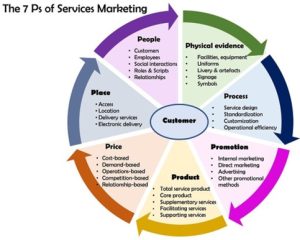
- Product:Defining the intangible service, including its quality, design, and features.
- Price:Pricing services is more complex than pricing physical goods and must consider labor, overhead, and market perception of value.
- Place:Ensuring services are accessible and convenient for the consumer. Digital delivery channels are now central to this.
- Promotion:Communicating the benefits of an intangible service through advertising, public relations, and other means.
- People: Service delivery is heavily dependent on the people involved. Training employees to provide exceptional service and building an internal service culture are critical.
- Process: Streamlining the procedures and flow of activities to ensure efficient and consistent service delivery. The customer’s experience of the process itself is a key part of the service.
- Physical Evidence: Making the intangible service more tangible. This includes the physical environment (for in-person services), branding, and other visual cues that build trust and reinforce the brand’s promises.
Service marketing process steps
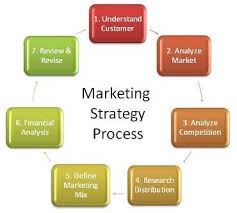
The service marketing process is a strategic framework for promoting intangible services, focusing on customer relationships and the unique characteristics of services like their intangibility and variability. It adapts the traditional marketing process to focus on a superior customer experience, which is central to building trust and loyalty.
Strategic planning steps
- Understand the marketplace– This foundational step involves conducting comprehensive market research to understand the needs, wants, and desires of customers. You should also analyze market trends and competitors to identify opportunities and threats.
- Define a customer-based marketing strategy– Based on your research, decide which customers to serve and how to create a unique value proposition that appeals to them.
- Segmentation: Divide the market into specific subgroups based on demographics, behavior, or interests.
- Targeting: Select which segment(s) to focus on.
- Positioning:Determine how you want your service to be perceived in the minds of your target customers compared to competitors.
- Develop the service marketing mix (7 P’s)- While product marketing uses 4 P’s (Product, Price, Place, Promotion), service marketing expands this mix to account for its intangible nature.
- Product (Service):The service itself, tailored to meet customer needs. This involves designing the service offering, including its quality, reliability, and features.
- Price: Pricing strategies that reflect perceived value, costs, and competition, such as subscriptions, bundles, or tiered plans.
- Place:The channel and location for service delivery, such as a physical office, a website, or a mobile app. Convenience and accessibility are key.
- Promotion: The communication methods used to create awareness and persuade customers, including advertising, content marketing, and public relations.
- People: The employees and service providers whose skills, attitude, and behavior directly influence the customer experience. Excellent customer service is essential.
- Process: The procedures, mechanisms, and flow of activities by which the service is delivered. An efficient and reliable process leads to a positive customer experience.
- Physical Evidence: The tangible cues customers use to evaluate the service, such as a clean facility, a user-friendly website, or professional branding.
- Implementation and evaluation steps
- Execute the marketing plan– This involves putting the strategies and marketing mix into action. Allocate the budget and resources, develop content, and launch campaigns. For services, this includes training staff and fine-tuning the processes for delivery.
- Deliver a superior customer experience– Since services are consumed as they are produced, the delivery process itself is a critical part of the marketing. Focus on building strong, profitable relationships by ensuring consistent quality at every customer touch point.
- Evaluate results and refine the strategy– Continuously monitor key performance indicators (KPIs), such as customer satisfaction and retention rates, to measure the success of your marketing efforts. Use this feedback and data to identify what’s working and make necessary adjustments to the plan.